
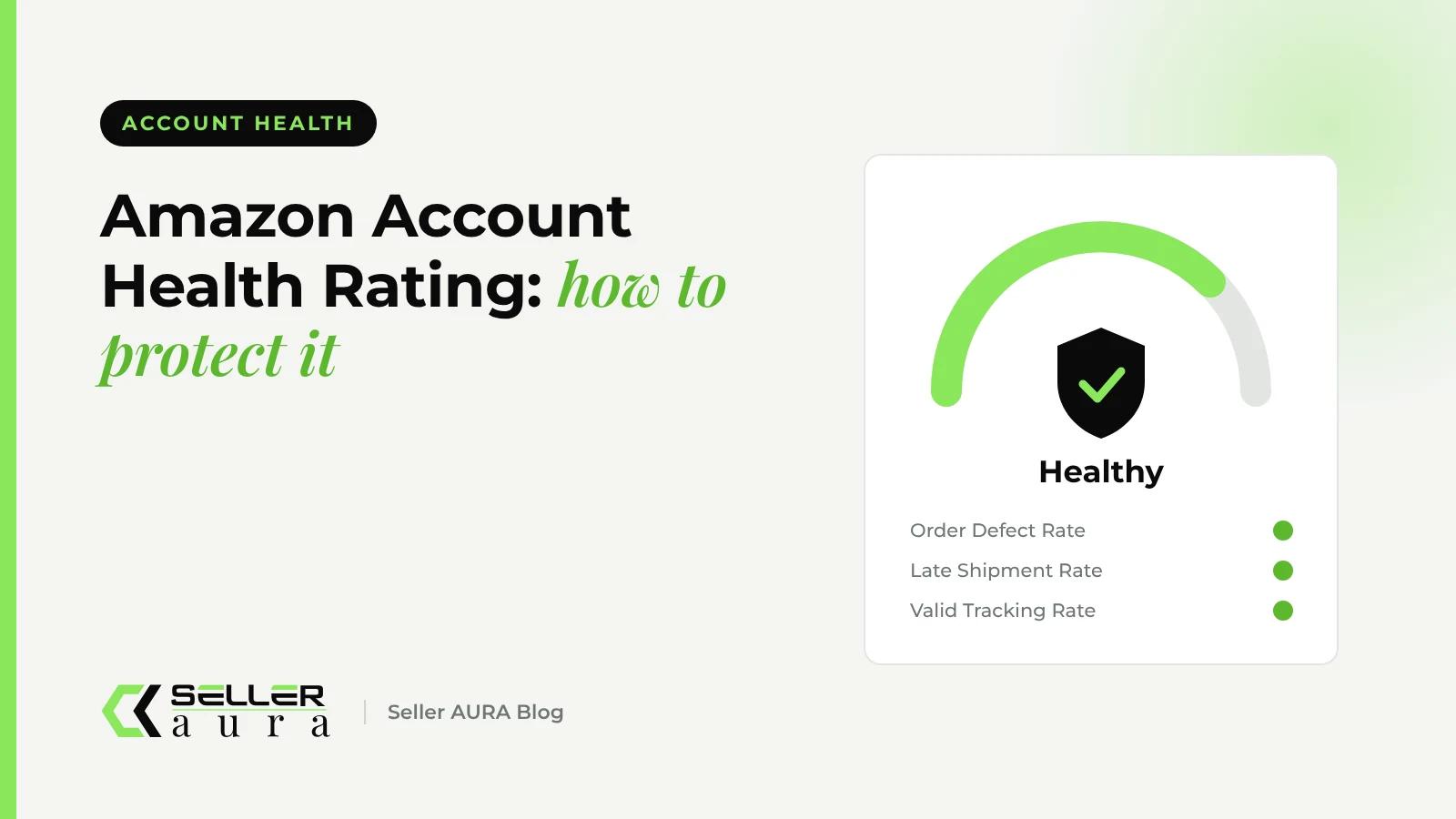
A single policy issue can put an Amazon account at risk. Here is what the Account Health Rating measures, the targets Amazon sets, and the routine that keeps accounts safe.
For most sellers, the Amazon account is the business. If it is deactivated, sales stop overnight. Yet account health is often only checked when a warning arrives, by which point the problem may already be serious.
Understanding how Amazon measures account health, and checking it on a regular routine, is one of the simplest ways to protect your revenue.
What the Account Health Rating is
The Account Health Rating (AHR) is Amazon's score for how well your account follows its selling policies. It runs from 0 to 1,000. A score of 200 or above is shown as healthy, 100 to 199 is at risk, and below 100 is critical, where the account can be deactivated.
The score is driven by policy violations, such as intellectual property complaints, product authenticity or safety issues, restricted products and listing policy breaches. More serious and more recent violations have a larger effect.
The performance targets Amazon expects
Alongside the AHR, Amazon tracks customer service and shipping performance. The main targets are:
- Order Defect Rate below 1%. This covers negative feedback, A-to-z Guarantee claims and chargebacks.
- Late Shipment Rate below 4% for seller-fulfilled orders.
- Pre-fulfilment Cancel Rate below 2.5% for seller-fulfilled orders.
- Valid Tracking Rate above 95% for seller-fulfilled orders.
FBA orders are largely handled by Amazon, but customer feedback and claims on FBA orders can still affect your Order Defect Rate.
The most common causes of trouble
In the accounts we review, problems usually start in one of a few places: intellectual property complaints from other brands, listings flagged for restricted words or claims, product safety or compliance documents that were never uploaded, and inauthentic complaints triggered by a supplier change. Each of these can be resolved, but each needs the right evidence and a clear response.
Respond properly, not quickly
When a violation appears, it is tempting to send an appeal immediately. A weak appeal that does not address the root cause can make the situation harder to resolve. A good Plan of Action explains what caused the issue, what has been done to fix it, and what will stop it happening again, supported by documents such as invoices, test reports or authorisation letters.
A simple monitoring routine
- Check the Account Health dashboard at least twice a week.
- Review new performance notifications daily.
- Check for suppressed or inactive listings every week.
- Keep supplier invoices, safety documents and brand authorisations organised and ready to upload.
- Act on warnings while the account is still healthy, not when it reaches at risk.
Account health problems are far easier to fix early. If your account has warnings you are unsure about, our team can review them and set out the safest next steps. No agency can guarantee Amazon's decision, but a clear, well-evidenced response gives you the best chance.