
Agency fees are usually a flat retainer, a share of ad spend or a mix of both. Here is how each model works, what affects the price and the questions to ask before you sign.
When brands ask what an Amazon PPC agency costs, the honest answer is that it depends on the pricing model and on how much work the account needs. Two quotes can look very different on paper and still cover very different services.
This guide explains the main pricing models, what pushes the price up or down, and how to compare proposals fairly. One point applies to all of them: the agency fee is paid on top of your advertising budget, which goes to Amazon.
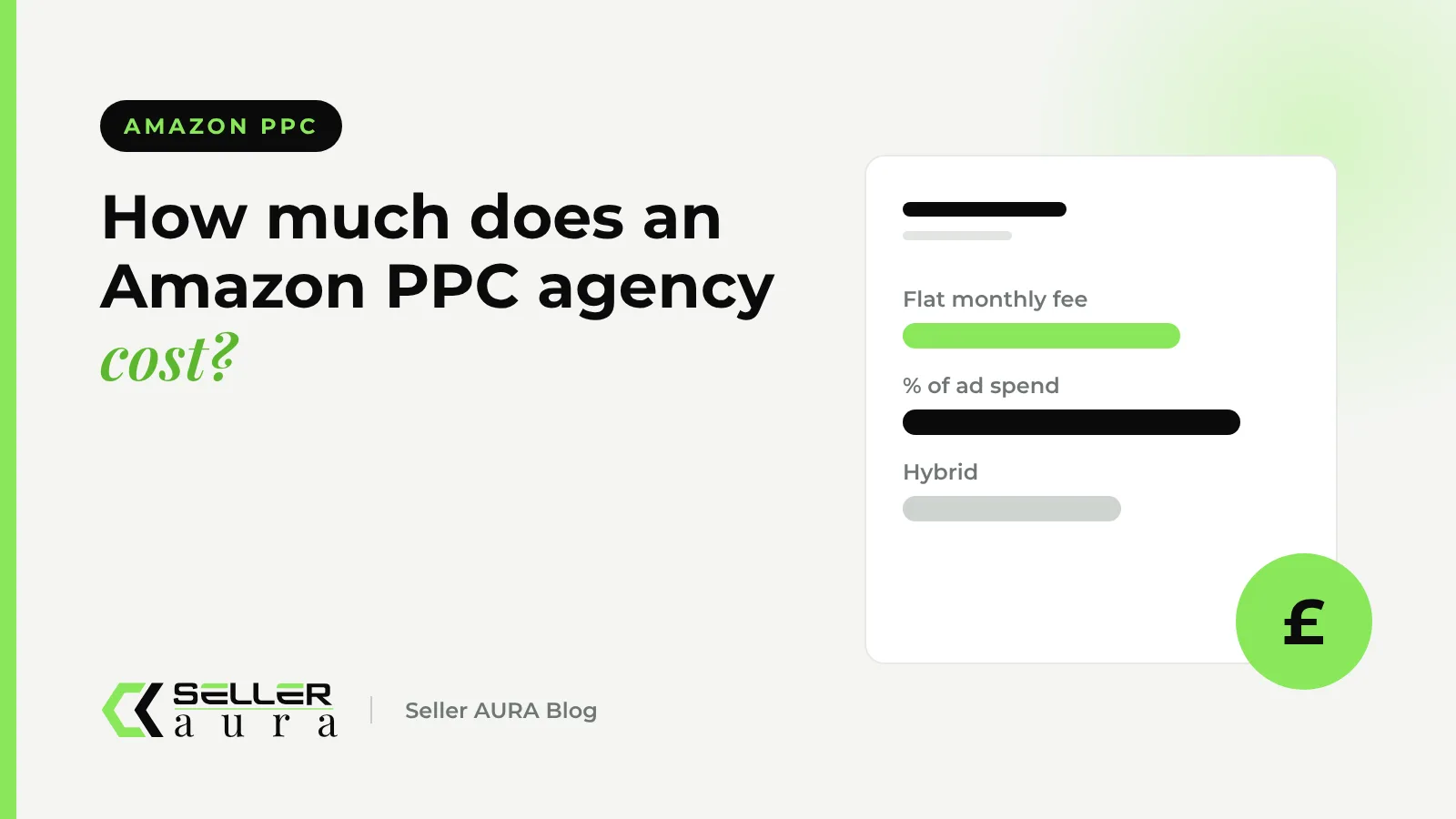
The three common pricing models
- Flat monthly fee. A fixed retainer for an agreed scope of work, whatever your ad spend. It is predictable, and the agency has no incentive to push spend up for its own sake.
- Percentage of ad spend. The fee rises and falls with your budget. Industry guides commonly cite around 10% to 20% of monthly ad spend, usually with a minimum monthly fee.
- Hybrid. A fixed base fee plus a percentage of spend or a performance bonus tied to agreed targets, such as a lower TACoS.
None of these is right for every brand. A flat fee suits brands that want a clear monthly cost. A percentage model can suit very large accounts where workload grows with spend, but it needs profit targets attached, otherwise higher spend is rewarded even when it is not profitable.
What affects the price
- Number of products and campaigns to manage.
- Number of marketplaces, for example the UK plus Germany, France and the US.
- Ad types in scope: Sponsored Products only, or also Sponsored Brands, Sponsored Display and Amazon DSP.
- Whether listing optimisation, creative and reporting dashboards are included or charged separately.
- How often the account is optimised, and how much strategy time you get with a specialist.
Agency, freelancer or in-house?
A freelancer is usually the cheapest option and can work well for a small catalogue, but cover for holidays and depth across ad types can be limited. An in-house specialist gives full focus but brings salary, training and software costs. An agency sits between the two: a team with specialists across PPC, listings and creative, without the cost of hiring each role.
Red flags when comparing agencies
- No written scope of work, so you cannot tell what is included.
- Reporting that shows only ACoS, with no search-term detail or TACoS trend.
- A percentage-of-spend fee with no profitability or TACoS targets.
- Long lock-in contracts with no review points or exit terms.
- The same campaign template for every product, regardless of margin.
- A fee that looks too low to cover weekly hands-on management.
Questions to ask before you sign
- Who will manage my account day to day, and how often will they work on it?
- What exactly is included, and what costs extra?
- Which targets will you report against: ACoS, TACoS, profit or total sales?
- What happens if results do not improve after the first three months?
- Can I see an example monthly report?
The cheapest agency is rarely the best value, and the most expensive is not always the best. The right partner is the one whose scope, reporting and targets match how your business makes money.
At Seller AURA, pricing is agreed with each brand after a free account audit, so the scope matches what your account actually needs.